Don't Believe the Hype : The Math Behind NFL Week 1 Chaos
The sportsbooks love Week 1 because it’s the one weekend where public hype completely overrides mathematical reality. Here is why you need to pump the brakes ...
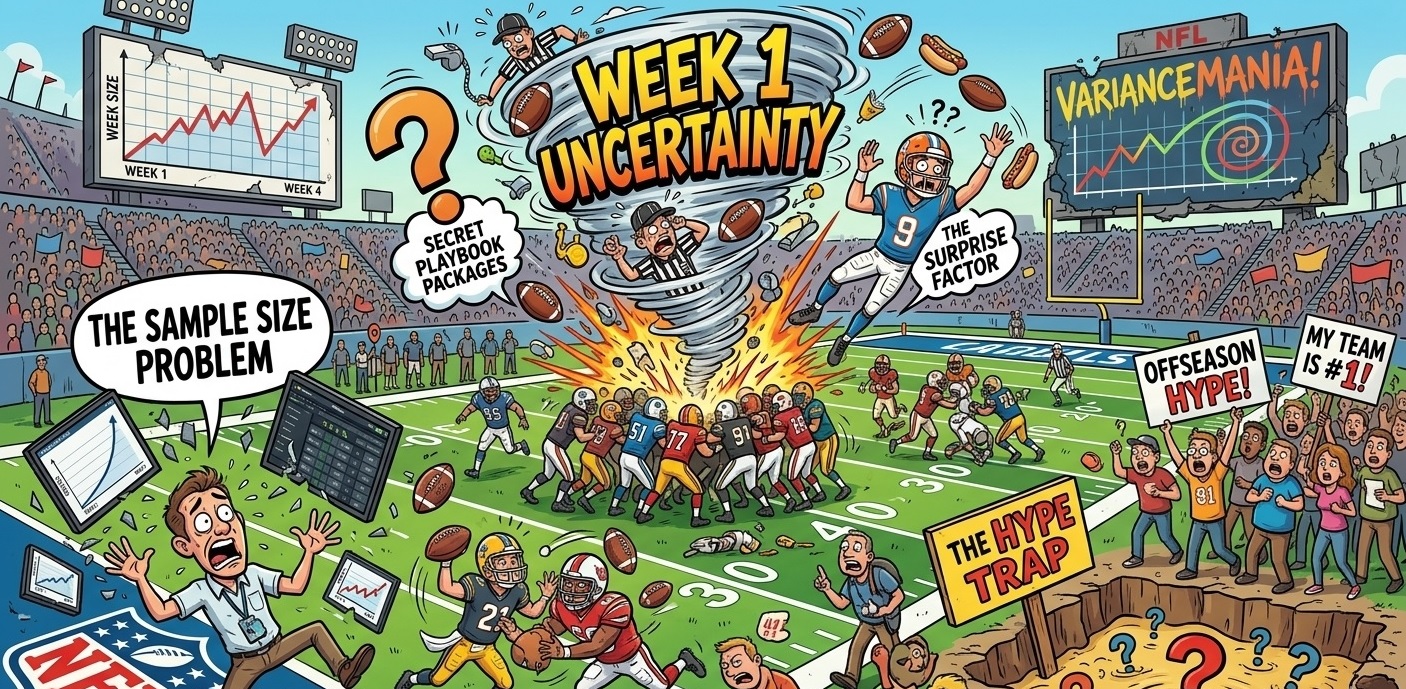
Imagine grading your coworkers' productivity on their very first Monday back from a two-month summer vacation. It’s the exact same team, the same office, and the same software. But on day one, people are still clearing out emails, shaking off the rust, and getting back into their routine. You wouldn't judge their entire yearly output on that first chaotic morning back, right? Yet every single September, millions of NFL bettors pour their bankrolls into Week 1 games acting like they know exactly how the season will play out. They don’t. Week 1 is historically the most chaotic, unpredictable weekend of football all year.
Some of the classic hurdles for week 1 of every NFL season when it comes to sportsbetting include:
Here are some interesting stats for past week 1's in the NFL:
| Betting Split / Trend | Historical Record (ATS) | Cover Percentage |
|---|---|---|
| All Underdogs (Since 2000) | 183-163-14 | 53.0% |
| Divisional Home Underdogs (Since 2010) | 23-7 | 76.7% |
| Divisional Underdogs Overall (Since 2015) | 26-12-1 | 68.0% |
| Road Underdogs (Since 2019) | 36-25-0 | 59.0% |
| Short Underdogs (+3 points or fewer) (Since 2019) | 19-14-1 | 57.6% |
| Home Underdogs (Since 2019) | 18-16-1 | 52.9% |
It's clear like the standout trend here is underdogs on week 1. It's worth nothing that our model already makes favorable adjustments for home underdogs and division underdogs, regardless of what week it is. We have some basic trends data available for all seasons past. It is interesting to see the differences from season to season. But as far as home underdogs and division underdogs go, we will be putting together a new post on that later this season.
As chaotic as week 1 typically can be, last season our system somehow managed to go 7-1 in its recommended wagers. This is a clear example of a small sample size and it would be unrealistic to expect this kind of performance for this week 1 (or for any week!).
I am sure you are excited as everyone else out there as the kickoff to this season approaches. When it comes to wagering, remember it's a marathon, not a sprint. Be patient, gather your information and stay as rational as possible no matter how many unexpected outcomes we see.